
FIND OUT
MORE
TURBOPOWER FOR SPERM CELLS

Highly effective.
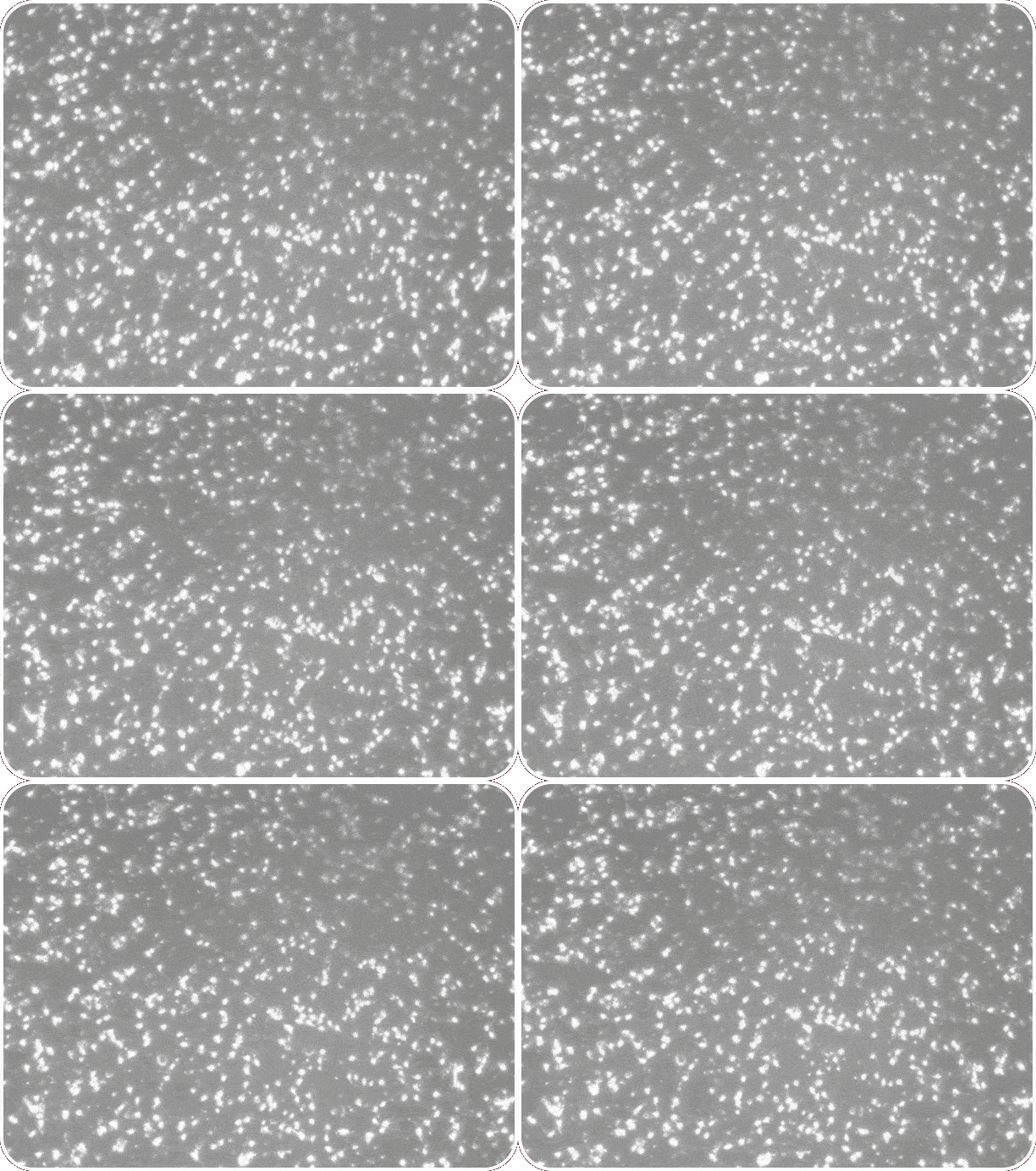
A spermiogram assesses the concentration, mobility and shape of sperm cells. The video on the right shows the distinct difference after 3 months of taking PROFERTIL®.
UNIQUE PERFORMANCE
In brief:
Male infertility has many causes – in industrialized countries, genetics, stress, changes in life patterns and dietary habits all lead to dramatic reductions in sperm cell production and quality. PROFERTIL® is a clinically-tested and patented formula, developed specifically to optimize sperm quality and to treat male sterility. Clinical studies show that taking PROFERTIL® for at least 3 months significantly improves sperm quality. No other formula has beaten its pregnancy rate of Ø 26-41%.
PROFERTIL® REDUCES DNA-BREAKS
“Brittle” sperm DNA can significantly increase the likelihood of miscarriage.


Breaks in sperm DNA strands greatly increase the chances of miscarriage
Breaks in the sperm-DNA (= DNA-fragments) can lead to embryo arrest. PROFERTIL® has been shown to reduce DNA-breaks in sperm cells after 3 months of use.
Sources:
Sedo C.A. et al.; JBRA Assist Reprod. 2017;21(4):343-350.
Cohen-Bacrie P. et al; Fertility & Sterility 2009, 19(5): 1801-1805.
Robinson et al. Hum Rep 2012:10, 2908-2917.
Hachem et al. Int J Womens Health: 2017:9, 331-345.
Lipovac M. et al.; EMJ Urol. 2014;1:60-65.
Eidenberger F. et al.; Fertility & Reproduction 2019; 1:136-140. First results presented by Prof. Dr. Martin Imhof at Aspire 2019.
SUCCESS STORIES FROM
FERTILITY EXPERTS AND COUPLES



JUST TWO PILLS, ONCE A DAY
Directions for use
PROFERTIL® is available as a 1-month pack (60 pills) and a 3-month pack (180 pills). Take two capsules per day with or after a meal and together with something to drink. The capsules should be taken for a period of at least three months in order to optimize each individual phase of the spermatogenesis. However, PROfertil® can and should be continued until pregnancy. For specific questions regarding the optimal duration of intake and for additional questions, please consult your physician.
To be used under medical supervision. Please consult your physician before first use or when changing the recommended directions for use.
HOW «SHE» CAN TURN THE DREAM OF A BABY INTO REALITY
FEMALE FERTILITY: RESTORE IT!

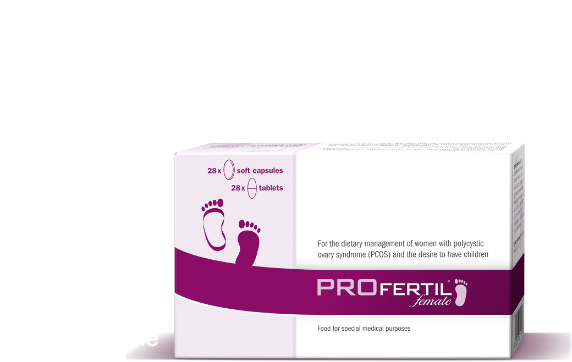
THERE IS ONLY ONE NUMBER ONE.


At a glance:
- Improves all sperm parameters necessary for successful conception and pregnancy 1,2,5,6,7,8
- Significant improvement in motility, morphology, sperm volume and sperm count 1,2,5,6
- Significant reduction of DNA fragmentation in sperm cells 3,4
- Supports the recovery of sperm quality after COVID-19 disease 8
- Pregnancy rate: avg. 26-41%1,4,5,6
- Present in over 70 countries
- Made in Austria / GMP quality
1. Imhof M. et al.; Improvement of sperm quality after micronutrient supplementation, ESPEN 2012; 7: e50-e53.
2. Lipovac M. et al.; Comparison of the effect of a combination of eight micronutrients versus a standard mono preparation on sperm parameters, Reproductive Biology and Endocrinology (2016) 14:84.
3. Lipovac M. et al.; Sperm DNA fragmentation decreases after micronutrient supplementation, EMJ Urology 2014; 1:60-65e.
4. Lipovac M. et al.; The effect of micronutrient supplementation on spermatozoa DNA integrity in subfertile men and subsequent pregnancy rate; Gynecological Endocrinology 2021 Jun; 37(6).
5. Schauer I. et al.; Micronutrients as an alternative to fertility treatment in men with subclinical varicocele, EAU, Annual meeting, Abstract, Bratislava, Oct 2010.
6. Imhof M. et al.; The use of the nutraceutical „PROFERTIL®“ – a dietary management of the „male factor“, for the improvement of semen quality, EAU, Annual meeting, Abstract, Bratislava, Oct 2010.
7. Tsounapi P. et al.; Effects of a micronutrient supplementation combined with a phosphodiesterase type 5 inhibitor on sperm quantitative and qualitative parameters, percentage of mature spermatozoa and sperm capacity to undergo hyperactivation: a randomized controlled trial. Andrologia 2018 Oct;50(8):e13071.
8. Aschauer J. et al.; Recovery of sperm quality after COVID-19 disease in male adults under the influence of a micronutrient combination: A prospective study, Arch Ital Urol Androl. 2023 Mar 13;95(1).
